The commons.
The commons were land. Not private land and not government land. Land that belonged to the community, and to nobody. You could graze your animals there. You could gather wood. You could build a life around something that was simply there, shared.
They were not an accident. They were a system. A set of informal rules, enforced by the community, that kept resources available to the people who needed them. They lasted for centuries. Millions of people depended on them.
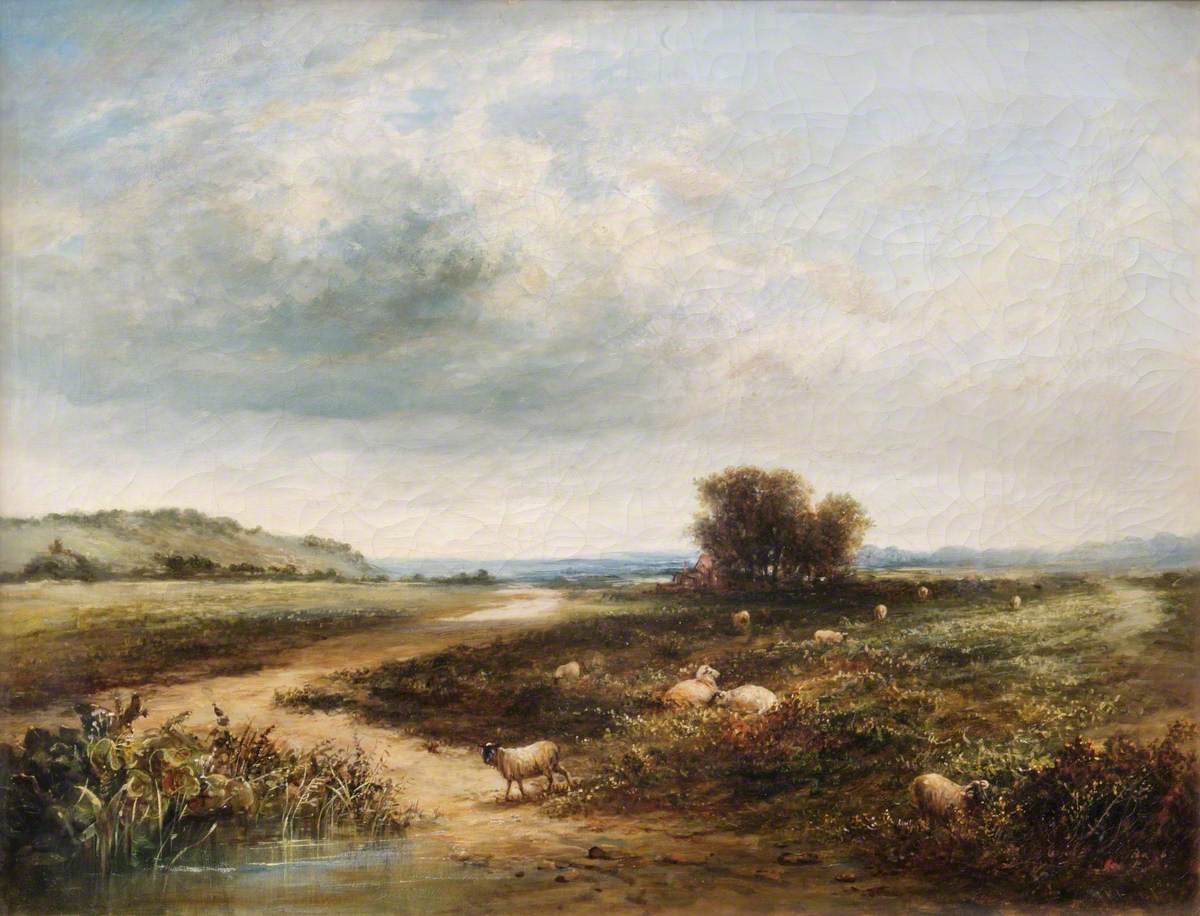
this belonged to everyone
The enclosure.
Between 1604 and 1914, Parliament passed 5,265 individual Acts. Each one took common land and gave it to someone. A landlord. A lord. A company. The process had a name.
They called it .
Millions of people who had farmed that land for generations were told to leave. The land stayed. They had to go. The fields that fed communities were converted into private estates. The people who had worked them were pushed into cities, into factories, into dependence.
It took less than three hundred years to end something that had lasted for a thousand. Parliament made it legal. Surveyors made it tidy. The landlords called it progress.
The parallel.
Three companies run most of the intelligence in the world right now. They built the training infrastructure. They wrote the rules for access. They set the prices.
They can change any of this, at any time. There is nothing you can do about it.
That is enclosure. The second time. The thing being taken is not land: it is cognitive capacity. The ability to reason, to search, to write, to analyse, to understand. These are being fenced off and sold back to you by the request.
The surveyors are engineers now. The Acts of Parliament are Terms of Service. They still call it improvement.
The counter.
Common is not a better API. It is not a cheaper cloud. It is the structural counter to enclosure.
When you use Common, your query moves through a network of specialist models running on devices owned by the participants. Each specialist knows its domain and routes itself. Multiple specialists can respond in parallel, and their answers are synthesised into a single, higher-quality result.
Nobody owns the centre, because there is no centre. Nobody can revoke access, because access is mathematical. The structure itself is the guarantee.
it lasted a thousand years
The invitation.
This is early. The network is small. The latency is not yet competitive with the centralised alternatives.
But the structure is right. And structure is what matters. The commons lasted a thousand years not because of any particular technology, but because the arrangement of ownership and access was built correctly.
Run a node. Make it yours.
Join the network.
Running a node contributes compute to the network and keeps AI decentralised. Any modern consumer device can participate.
Get in touch.